In Spain, the choice between a new build and a resale home is more fundamental than in the Netherlands. It isn't just about style or year of construction, but also about taxes, legal guarantees, the buying process and how much patience you need to bring. Below is an honest comparison with no preference upfront.
The key differences at a glance
For those short on time, these are the differences that really matter. Below the table we explain each line with figures.
| Item | New build | Resale |
|---|---|---|
| Tax on purchase | IVA 10% | ITP 6 to 13% (depends on the region) |
| AJD (Valencia) | 1.5% of the purchase price | Not applicable |
| Timeline | 9 to 18 months (off-plan) | 2 to 3 months |
| Payment structure | Four instalments | Once, at the escritura |
| Guarantees | 10 years (Ley 38/1999) | None by law |
| Aval bancario (bank guarantee) | Mandatory | Not applicable |
| Energy rating | A or B | Varies from A to G |
| Room to negotiate | Limited | 5 to 15% possible |
Taxes compared, in concrete terms
On a home costing €350,000, the taxes work out as follows (Comunidad Valenciana):
- New build: €350,000 + IVA 10% (€35,000) + AJD 1.5% (€5,250) = €390,250 in total
- Resale: €350,000 + ITP 10% (€35,000) = €385,000 in total
Difference: about €5,000 in favour of resale. Not earth-shattering, but measurable.
ITP varies by region and changes regularly. As of June 2026:
- Comunidad Valenciana: 10% general rate until 1 June 2026, then reduced to 9%. Above €1 million it stays at 11%. Reduced rate of 6% for a first home under €180,000 for buyers under 35.
- Madrid: 6% general rate
- Andalucía: 7% flat rate; reduced 3.5 to 6% for specific cases (young buyers, low prices, large families)
- Catalunya: progressive since June 2025: 10% up to €600k / 11% up to €900k / 12% up to €1.5m / 13% above €1.5m. Plus a 20% surcharge for grandes tenedores (large property owners)
Always ask your gestor for the current rate in your region; policy can change every tax year.
When should you choose a new build?
Four scenarios in which a new build is often the better choice:
- Energy efficiency is a priority. New builds after 2020 meet strict insulation requirements (CTE-DB-HE) and almost always have an A or B rating. With rising energy prices, that saves thousands of euros a year.
- You don't want a renovation project. With a new build, turnkey almost always really means turnkey: kitchen, bathroom, electrics, plumbing, all new and under guarantee.
- You value a 10-year structural guarantee. Under Ley 38/1999, builders must provide guarantees: 10 years on structural defects (estructurales), 3 years on defects affecting habitability (habitabilidad), and 1 year on finishes (terminación o acabado).
- You have time.Buying off-plan means waiting 9 to 18 months for completion, with payments spread over the build. If you're in no hurry and your cash flow can handle it, no problem.
When should you choose a resale home?
Four scenarios in which a resale home is a better fit:
- You want to be able to move in straight away. With a resale home you can have the keys within 2 to 3 months of signing. With a new build you often wait a year.
- There are no new builds in the location you want.Old town centres (Castellón centro, Peñíscola's historic centre), a front-line beach position on a seafront that is already fully built up: there are no new builds there, so you are limited to existing homes.
- Character and uniqueness matter to you. A 100-year-old village house inland has a soul that a new build cannot imitate. For some buyers, that is the whole point.
- You want to negotiate. With resale homes, 5 to 15% off the asking price is a realistic negotiating target, especially if the property has been empty for a long time. With new builds the price list is public and there is little room to move.
Hidden costs: differences you often don't see coming
On top of the main costs, there are categories of expense that differ by type of home. Here is the honest list.
With a new build
- Comunidad de Propietarios still being set up.In the first months after completion, the owners' association is not yet up and running. Expect some chaos around pool maintenance, communal gardens and odd jobs.
- Snagging defects. Almost every new build has 20+ small defects at handover (a paint smear, a crooked socket, a leaking tap). You have to report them within 14 days, which takes time and means being there.
- Garden work often not included.A "private garden" usually means sand and gravel. Planting, irrigation and a terrace are up to you. Budget €5k to €15k.
- An empty neighbourhood. In new residential areas, amenities (shops, schools, public transport) only follow later. A few years of living somewhat out of the way can be welcome peace and quiet, or an irritation.
With a resale home
- Overdue maintenance. Bathroom, kitchen, pipes, electrics: most homes older than 25 years need at least one major renovation. Budget €15k to €60k depending on age and condition.
- Energy renovation. Going from an F or G rating to A/B usually costs €10k to €30k (insulation, windows, heat pump). Under the EU EPBD directive, Spain has to draw up national renovation plans which are expected to require rating E from 2030 and rating D from 2033 as a minimum for sale or rental. Not a direct EU ban, but a policy direction worth bearing in mind with older homes.
- Hidden defects. Damp, leaks, asbestos in old roofs, cracking. An independent informe técnico (building survey) by a Spanish architect costs €300 to €600 and is always worth the money.
- Plusvalía Municipal sometimes passed to the buyer. By law the seller pays, but in practice it is sometimes passed on in the price or in the contract. Read carefully.
Our own choice: why we chose a new build
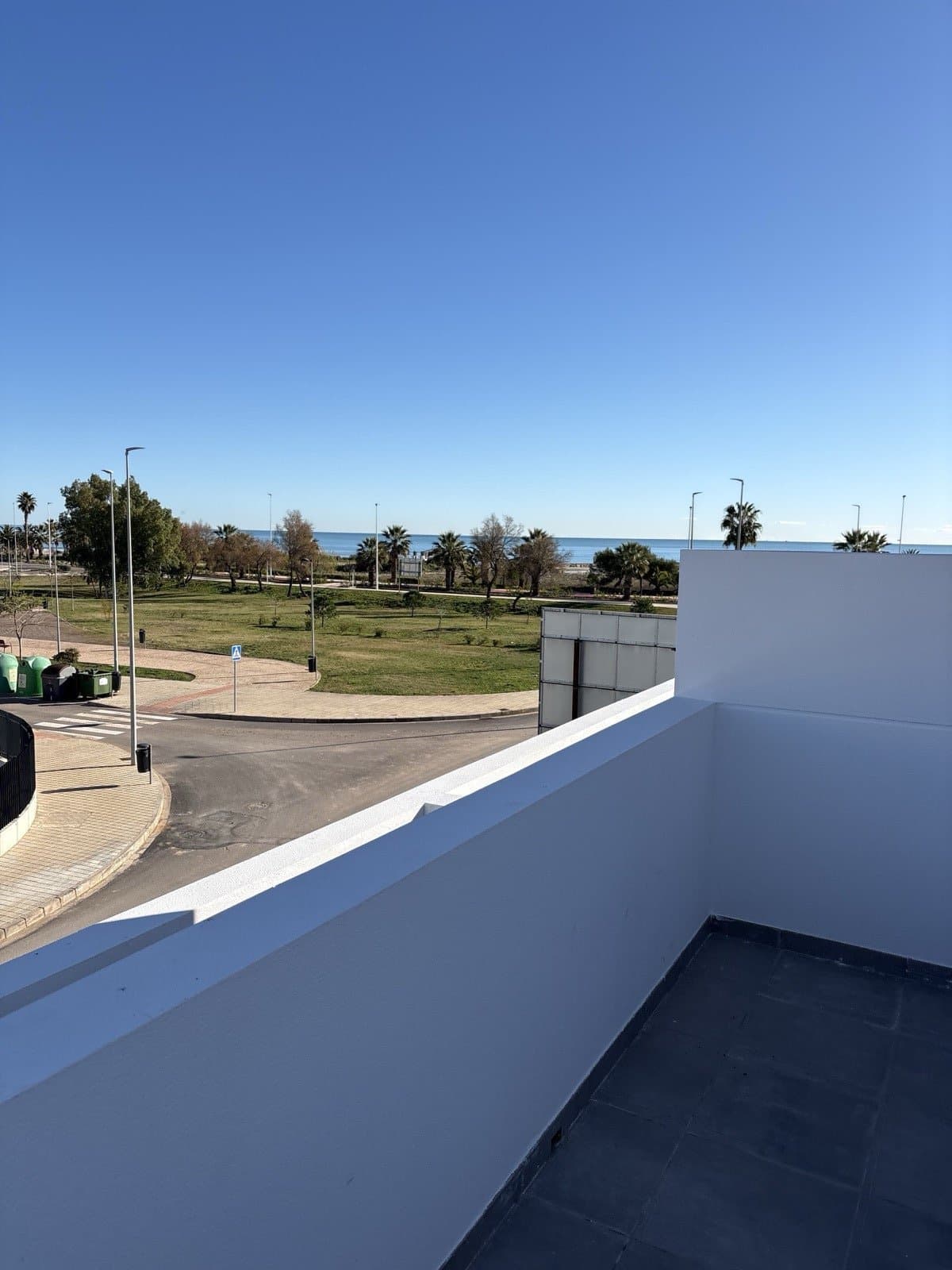
For our own purchase we chose a new build: a chalet adosado (terraced house) in Grau de Castellón, bought from Metrovacesa in 2025, keys in June 2026.
Our reasoning:
- Energy efficiency weighed heavily: we live there ourselves and don't want high energy bills on a home we want to use for 30 years
- We didn't want a renovation project on top: we have lived in Spain for years and don't have the headspace for building stress
- We had time: no urgent pressure to move in within three months
- The 10-year structural guarantee gave peace of mind on a stretch of coast where salty air has a structural impact
The trade-off: 18 months between reservation and keys, four instalments that squeeze your cash flow, and the mental work of tracking the bank guarantee, translations and the Modelo 036. We underestimated that: not the amounts, but the number of small decisions along the way.
Read the whole story on Our experience.
Five questions to help you decide
Answer these five questions honestly for yourself, and the choice usually becomes clear:
- When do you want to be able to move in? Straight away → resale. Within 12 to 18 months is fine → a new build is an option.
- How important is energy efficiency? Crucial → new build. Happy to invest in it → resale with a renovation plan.
- What does your cash flow look like?Four instalments over 18 months is fine → new build. You'd rather pay in one go → resale, possibly with a mortgage.
- Do you want to negotiate?Yes, that's part of property → resale. No, a fixed price is fine → new build.
- How much guarantee do you want? 10 years on the structure gives peace of mind → new build. I trust a good informe técnico → resale.
Finally
There is no universally right choice. New builds and resale homes are two different products, each with their own costs, pace and risks. The right choice depends on where you are in life, what your time is worth, and how you feel about maintenance.
What applies in both cases: independent guidance, from someone who works for you and not for the seller, prevents most costly mistakes. Whether that is a lawyer checking the purchase contract, a gestor coordinating the paperwork, or a buyer's guide following the whole process.
Still torn between a new build and a resale home?
Book a no-obligation 30-minute call. We'll discuss your situation, area and wishes, and tell you honestly which direction makes sense for you.