
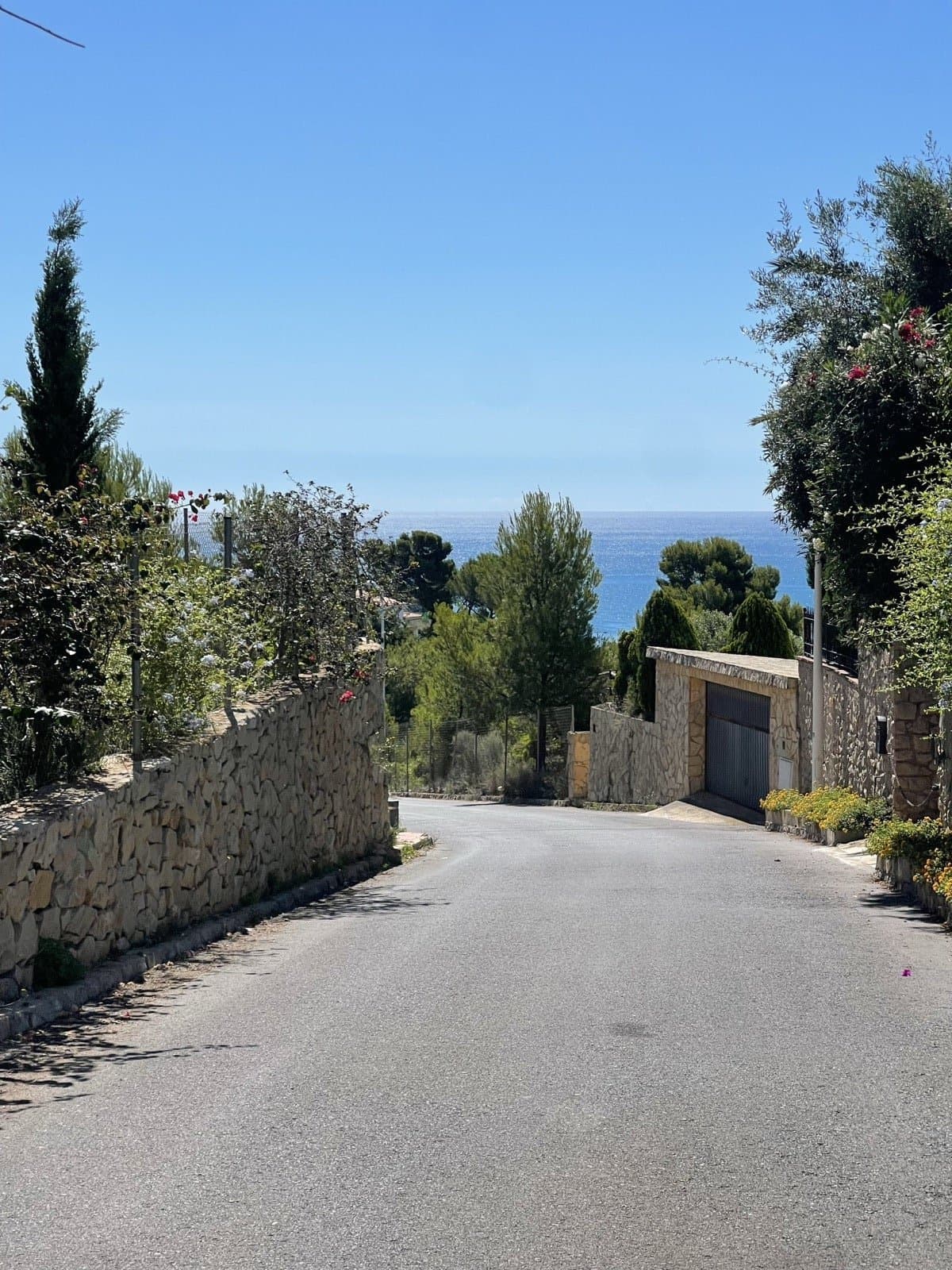
Ask a Dutch person about “the Spanish coast” and in 80% of cases you'll hear Benidorm, Calpe or Torrevieja: all Costa Blanca. For most Dutch people, the Costa del Azahar (the province of Castellón, just north of Valencia) is a blind spot. Unfairly so: it is a separate stretch of coast, in a separate province, with a different price level, different demographics and a different reason to live there. This article puts the two side by side the way someone who lives on the Azahar and regularly visits the Blanca would.
First of all: these really are two different stretches of coast
A misconception we often come across: that the Azahar and the Blanca border each other. They don't. Between them lie about 110 km of the Costa de Valencia, the coast of the province of Valencia, with Sagunto, Valencia city, Cullera, Gandía and Oliva. The Costa del Azahar ends at Almenara (the southern tip of the province of Castellón), and the Costa Blanca only starts at Dénia (the northern tip of the province of Alicante).
The Costa del Azahar runs roughly from Vinaròs (on the border with Catalonia) to Almenara and is about 120 to 130 km long. The main coastal towns are Vinaròs, Benicarló, Peñíscola, Alcossebre, Oropesa del Mar, Benicàssim, Grau de Castelló, Almassora, Burriana, Nules, Moncofa and Almenara.
The Costa Blanca runs from Dénia to Pilar de la Horadada and, at 200 to 244 km, is almost twice as long. The names Dutch people know: Dénia, Jávea (Xàbia), Moraira, Calpe, Altea, Benidorm, Villajoyosa, El Campello, Alicante city, Santa Pola, Guardamar, Torrevieja and Orihuela Costa.
The biggest difference: price per m²
For comparable quality by the sea, you pay roughly 30 to 50% lesson the Costa del Azahar than on the northern Costa Blanca. Below are the figures per municipality from Idealista's second quarter of 2026. These are published asking prices, so actual sale prices are usually slightly lower.
Costa Blanca: premium top end
- Moraira (Teulada): €3,566 to €4,497 / m², the most expensive municipality in the whole province
- Jávea / Xàbia: €3,958 / m² (+19.8% year on year)
- Calpe: €3,438 / m²
- Altea: €3,415 / m²
- Benidorm: €3,246 / m² (+15% year on year)
- Dénia: €3,217 / m² (+14% year on year)
Costa Blanca: mid-range
- Alicante city: €2,549 to €2,811 / m², a new record in April 2026
- Torrevieja: €2,502 / m²
- Orihuela Costa: €2,500 to €3,000 / m² (municipal average 2,847 / m², coastal areas higher)
Costa del Azahar
- Benicàssim: €2,708 to €2,744 / m², the most expensive in the province of Castellón
- Peñíscola: €2,171 / m² (+13.8% year on year)
- Oropesa del Mar: €1,957 / m²
- Castelló de la Plana (city + Grau): €1,326 to €1,666 / m² depending on the neighbourhood
- Vinaròs / Benicarló: about €1,300 to €1,700 / m²
- Burriana: €1,109 / m² (+14.5% year on year)
Important: price isn't everything. What you get for your money also differs. On the northern Costa Blanca you pay more for a proven market (strong rental demand, steady growth in value, broad demand). On the Costa del Azahar you are in a market that is still emerging: a plus for the entry price, a minus for liquidity if you want to sell tomorrow.
Getting there from the Netherlands
This is the difference many Dutch people underestimate, but it is smaller than you might think. The Costa Blanca has a large airport of its own; the Costa del Azahar benefits from Valencia.
Alicante-Elche (ALC): for the Costa Blanca
- 19.9 million passengers in 2025 (+8.5% year on year, a record)
- From Amsterdam: about 71 flights a week (Transavia 23, KLM 2, plus Vueling and easyJet). Daily, often several times a day
- Driving times: Torrevieja 40 min, Benidorm 45 min, Calpe about 1 hr, Jávea about 1 hr 15, Dénia about 1 hr 20
Valencia (VLC): for the Costa del Azahar
- About 9 million passengers in 2025 (+8.2%, a record year)
- From Amsterdam: KLM and Transavia fly direct daily. Less volume than ALC, but the daily link with the Netherlands is there
- Driving times: Castelló de la Plana about 50 min, Benicàssim about 58 min, Peñíscola about 1 hr 26, Vinaròs about 1 hr 45
Castellón-Costa Azahar (CDT)
- A small regional airport with about 291,000 passengers (January to October 2025)
- No direct flight from Amsterdam. Only Ryanair, on summer routes to Manchester, Stansted, Brussels-Charleroi, Berlin, Düsseldorf-Weeze, Budapest, Milan, Bologna, Kraków and Porto
- 25 min from Castellón city, 30 min from Peñíscola, 45 min from Benicàssim. Handy for visitors from Belgium and Germany
What this means in practice:for Dutch travellers, Valencia is the main airport for the Azahar. An hour's drive from VLC to Benicàssim is not much different from an hour's drive from ALC to Calpe. Worth noting: flights to ALC are often cheaper thanks to the volume, and Castellón Airport fills the gap for those who fly around Europe more than to and from the Netherlands.
Foreign residents and culture
Here is a difference that some see as the argument for one coast and others for the other.
Costa Blanca: shaped by Northern Europeans
In 2024 the province of Alicante had 464,601 foreign residents, or 23.3% of the population, the highest share in Spain. By nationality: 70,786 British (by far the largest group), 17,777 Dutch and 15,503 Germans. The result: whole neighbourhoods in Benidorm are English-speaking, in Torrevieja you'll find Dutch supermarkets, and along the Albir corridor signs are in four languages.
For some buyers, this is exactly why they choose the Costa Blanca. No language barrier for everyday matters, it's possible to find a Dutch GP and dentist, building a circle of friends is easy through expat clubs, and big celebrations are held Dutch-style.
Costa del Azahar: primarily Spanish
The province of Castellón also has about 130,000 foreign residents (around 20% of the population), but the profile is completely different. The largest groups are Romanians and Moroccans, mainly working in the tile and ceramics industry inland. Northern European coastal residents (British, Dutch, German) are far fewer. In Castellón city or Grau de Castelló you notice it straight away: hardly anyone speaks English or Dutch at home.
For some buyers, that is the whole point. No expat bubble, no Dutch supermarket on the high street, and within a year you'll speak functional Spanish because you have no choice. For others it is a hurdle: you have to deal with your GP and gestor in Spanish or through a Dutch-speaking adviser, and building a social life takes a bit more effort. We see that as a plus, but that is a personal preference, not an objective fact.
And tourism?
The Costa Blanca recorded more than 36 million overnight stays between January and September 2025. The Costa del Azahar did grow (it was the only Valencian province to show growth in May 2025), but it is in a completely different league. On a July afternoon, Benicàssim's beach doesn't have the same number of towels as Benidorm's. For enjoying your home that is a noticeable advantage; for a pure rental investment it is a handicap.
Climate
Both stretches of coast have a subtropical Mediterranean climate, but there is a measurable difference.
- Alicante: about 2,953 hours of sunshine a year, an average of 18.3°C, about 310 mm of rain a year: one of the driest regions in Spain
- Castelló (Benicàssim, Peñíscola): about 2,700 to 2,800 hours of sunshine a year, an average of 17.8°C, about 450 mm of rain a year: more rain, especially in autumn
You mainly feel the difference in October and November: Castellón sometimes gets a sudden “gota fría”, an intense downpour that can bring 100+ mm in a few hours. In summer the difference is negligible; both are dry, hot and sunny.
Infrastructure: AVE, hospitals, schools
High-speed rail (AVE)
- Madrid → Alicante: 2 hr 20 min, direct AVE line, high frequency
- Madrid → Castelló de la Plana: 2 hr 50 min, an AVE journey via Valencia on mixed track
- Valencia ↔ Alicante: currently 2 hr 15 min on mixed track. The new Castellón, Valencia and Alicante AVE line is planned for 2027: from then on about 50 min between Valencia and Alicante, with no more changing trains between the two provinces
Conclusion: if you regularly need to take the train to Madrid, Alicante is slightly faster and more frequent. Castellón has a direct AVE but fewer trains a day.
Healthcare
The Costa Blanca has a strong private healthcare network: Quirónsalud Torrevieja, HLA Vistahermosa Alicante, and private clinics in almost every larger town. English-speaking specialists are widely available.
Castellón has strong public provision (Hospital General Universitari, Hospital Provincial) plus Vithas Castellón for private care. For complex specialist care, people often go to Valencia (about 1 hr). For a healthy couple under 60 this makes little difference; for those who regularly need specialist care, the Costa Blanca is easier.
International schools
For families with school-age children this is a big deciding factor. The Costa Blanca has 15+ international schools spread from Dénia to Orihuela; English and German-language primary and secondary education is readily available.
The Costa del Azahar / province of Castellón has two: British School of Vila-real (British curriculum, ages 2 to 18) and the International English School of Castellón (IESC), part of the Dukes Education group. Enough for those staying within Castellón, but not a wide choice.
Taxes and rules: identical for both
Because both stretches of coast are in the same autonomous region (Comunitat Valenciana), the same regional taxes apply. From 1 June 2026 the transfer tax rate (ITP) on resale property is 9% (previously 10%). Above €1 million it stays at 11%. A first home for buyers under 35, subject to income conditions and a price of ≤ €180,000: 6%. For large families or people with a disability of ≥33% buying a first home of ≤ €180,000: 3%. At the same time, AJD (stamp duty) on new builds fell from 1.5% to 1.4%.
Vivienda turística (holiday lets) has a single regional framework (Decreto 10/2021 + Decreto-ley 9/2024) and uses the same numbering: VT-XXXXXX-A for Alicante, VT-XXXXXX-CS for Castellón. But the municipal restrictions differ a lot:
- On the Costa Blanca, Benidorm, Calpe and Alicante city have zoning rules and moratoria that make new licences difficult
- On the Costa del Azahar, Peñíscola and Benicàssim are slowly following the same line, but Vinaròs, Oropesa, Burriana and most other municipalities are still relatively open
If you are buying with letting in mind: always check with the ayuntamiento (town hall) of the specific municipality before you buy whether new VUT numbers are still being issued, whichever costa it is.
Type of property and building style
Costa Blanca: heavily geared towards urbanisations. Lots of high-rise apartments along the coast (Benidorm is famous worldwide for its skyline), golf resort villas inland, gated communities around Orihuela Costa, and hundreds of chalet adosado projects developed for the tourist market. Plenty of stock, easy to compare, a transparent market.
Costa del Azahar: less concentrated development. More Spanish chalets on the edges of towns, a lower-rise coastline with paseos(no mass high-rise except in a few parts of Benicàssim). The new-build projects that do exist, such as Metrovacesa in Grau de Castelló or near Sant Jordi, are increasingly aimed deliberately at foreign buyers, but are not built “for tourists” all year round. Less stock means less choice, but also less competition when you buy.
Beaches and surroundings
Both stretches of coast have excellent beaches. One objective measure is the number of Blue Flags (FEE):
- Alicante 2026: 95 Blue Flag beaches, first place in Spain
- Castellón 2026: 39 Blue Flag beaches, strong for a much shorter coastline
Per kilometre of coast, Castellón scores similarly or better. What differs is what lies behind it. The Costa Blanca has a lot of rocky hinterland (Sierra Helada, Montgó); the Costa del Azahar borders the Sierra de Irta nature park and the wet inland plain of La Plana. For walkers and mountain bikers, each coast has its own character, with no overlap.
Who the Costa Blanca makes more sense for
We're not saying: always choose the Azahar. The Costa Blanca is a better fit if one or more of these points is decisive for you:
- You want to live or commute within a Dutch-speaking community, with Dutch-speaking healthcare, friends and shops nearby
- You are buying as a pure rental investment and want the most proven tourist demand
- Cheap direct flights from the Netherlands are decisive for you: several times a day to and from Amsterdam versus once a day via Valencia
- You have school-age children who need an international school, and you want plenty of choice
- You need recurring complex medical care and want English-speaking specialists nearby
- You already have a network on the Costa Blanca (family, friends) and want to be near them
Who the Costa del Azahar makes more sense for
And the other way round: the Azahar is a better fit if one or more of these points matters to you:
- You want a 30 to 50% lower entry price for comparable quality on the Mediterranean
- You are looking for authentic Spanish living, not inside a British or Dutch bubble
- You value a quiet, non-touristy coastline: no crowded July afternoons on the beach, no packed, chattering promenades
- You find learning Spanish appealing (and your surroundings will make you)
- You accept that the airport is an hour's drive away: Valencia is easy to reach, with daily flights from Amsterdam, but not a flight every two hours as in Alicante
- You want a market that is still on the way up: a higher entry yield, less proven liquidity
Honest disclosure: why we guide buyers on the Azahar
We have lived in Grau de Castelló since July 2023. We bought our own home here through our B.V., know the gestores, notaries and lawyers personally, and we know which neighbourhoods in which towns are or aren't a good idea. We know the Costa Blanca as visitors: we have been there and have family and friends there, but we don't live there.
That is why our guidance services cover the Costa del Azahar (province of Castellón) and the surrounding municipalities in northern Valencia. Not because the Costa Blanca is the wrong choice; for many buyers it is the right one. But because we don't have the first-hand knowledge there that we do offer on the Azahar. Would a good Dutch-speaking buyer's guide on the Costa Blanca help you? Just ask us; we can pass on a few names.
Finally: both coasts have Dutch residents who are happy there
There is no objective “winner” between the Costa del Azahar and the Costa Blanca. Both have Dutch residents who have lived there for years and wouldn't leave for a second. The question is which one suits how you want to live, how you put your financing together, and what matters to you about your surroundings: language, crowds, price, accessibility, schools, healthcare.
If you are weighing this up and want honest advice (what would someone who lives here recommend?), book a free 30-minute call. We'll listen to your situation and tell you honestly which costa we think makes more sense for you. Even if that is the Costa Blanca.
Still undecided between the two coasts?
Book a no-obligation 30-minute call. We'll discuss your situation, price range and wishes, and tell you honestly which costa makes more sense for you, even if it isn't the Azahar.
Read also
New build or resale in Spain: which one suits you?
A comparison of taxes, guarantees, timelines and hidden costs, plus a five-question checklist.
Read the article →Applying for an NIE in Spain: step-by-step guide 2026
Via the Consulate General in Amsterdam or locally: documents, costs and timelines.
Read the article →